Care & watering for your new lawn
Your hydroseeded lawn needs consistent care in the first weeks. Follow this guide for the best results on your Holland, MI or West Michigan property.
Week-by-week expectations
Follow this timeline for the best hydroseeding results. Adjust based on weather — Michigan's rain can do some of the work for you.
Keep it moist
Water lightly 2–3 times per day (early morning, midday, late afternoon). Each session should be 5–10 minutes — just enough to keep the mulch damp, not flooded.
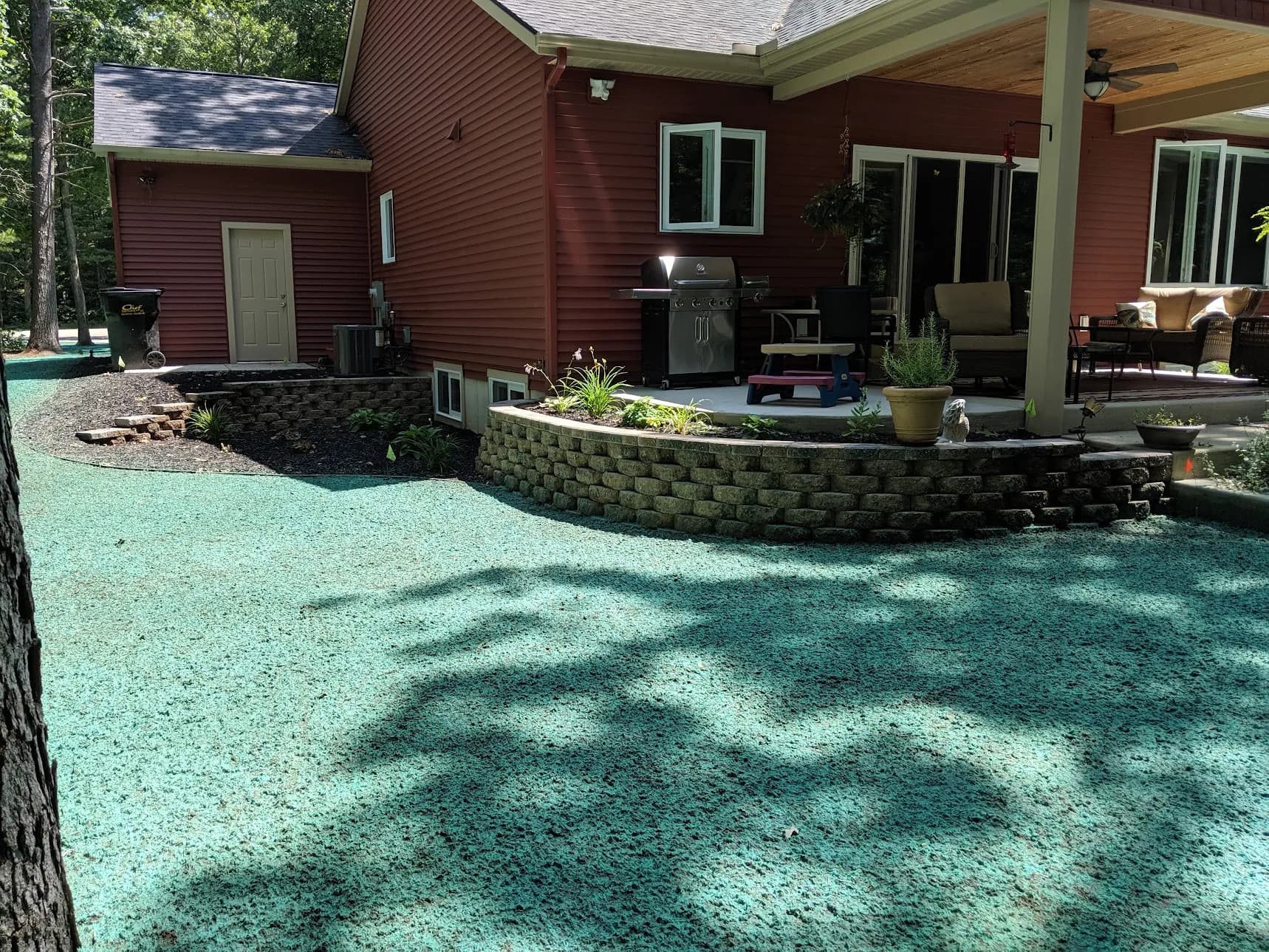
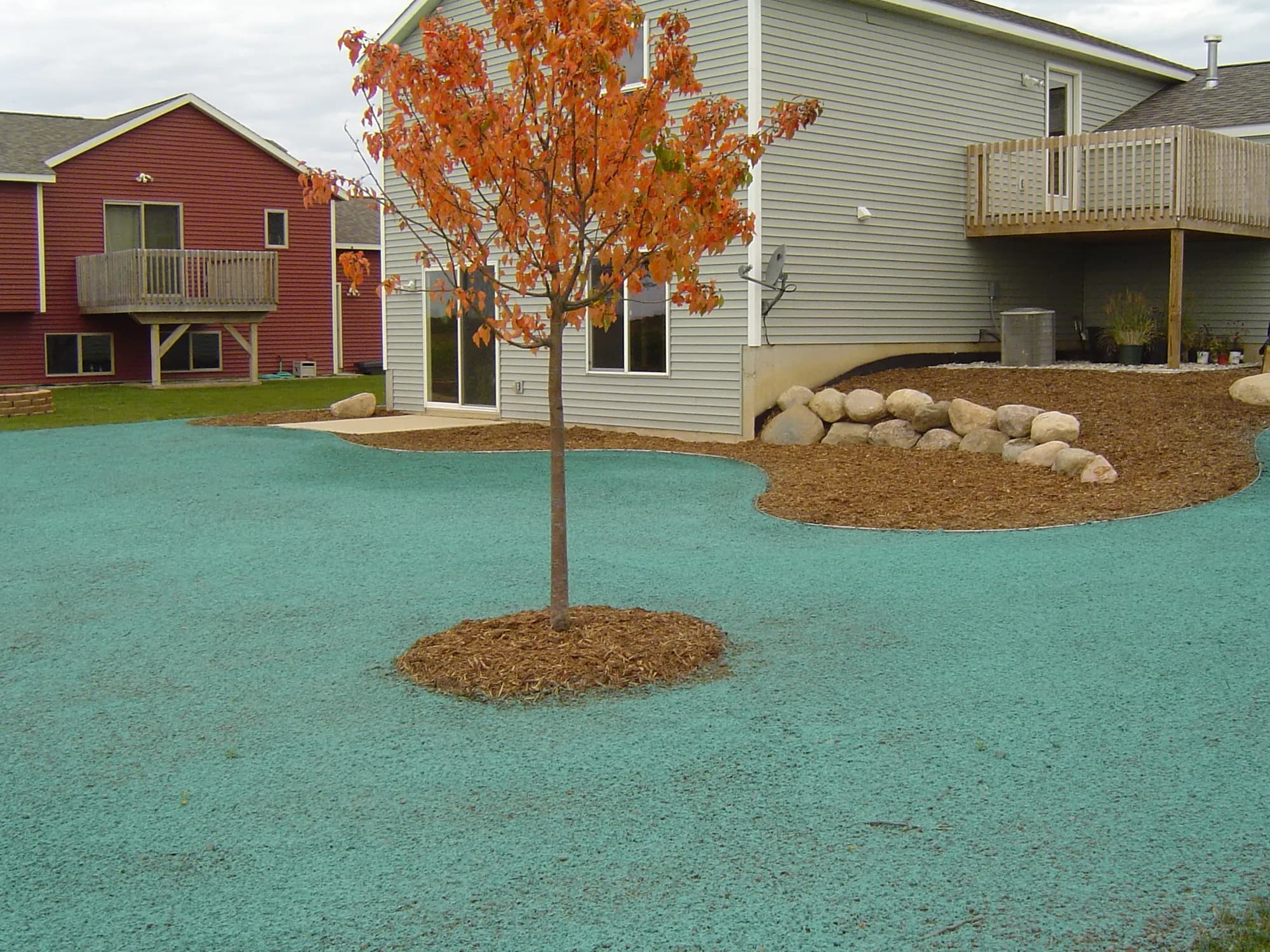
The green mulch will begin to fade in color. You may see the first tiny sprouts emerging by the end of week 2. Avoid walking on the area.
Don't let the mulch dry out completely or form a crust. If it rains, skip that watering session. Avoid puddling — standing water suffocates seeds.
Germination begins
Continue 2–3 times daily. You can reduce to 2 times daily if you see consistent sprouting and the soil stays moist between sessions.
Grass sprouts become clearly visible. Growth may be uneven — some areas germinate faster depending on sun exposure and drainage. This is normal.
Continue to stay off the lawn. Don't be alarmed by some weeds — they often appear before the grass fills in and will be crowded out over time.
Transition watering
Reduce to 1–2 times daily with slightly longer sessions (10–15 minutes). Start encouraging deeper root growth by watering a bit more deeply.
The lawn will start looking like a thin, green carpet. Grass should be 1–2 inches tall. The mulch layer mostly breaks down and is no longer visible.
If any bare spots remain, contact us — a touch-up application may be needed. Continue to avoid heavy foot traffic.
First mow
Transition to once daily or every other day, watering for 15–20 minutes per session. Deep, less frequent watering builds stronger roots.
Grass reaches 3.5–4 inches. Time for your first mow! The lawn will start filling in and thickening. You can begin light foot traffic.
Mow with a sharp blade. Set your mower to the highest setting — never cut more than one-third of the grass height. Mow when dry to avoid pulling up seedlings.
Filling in
Water every 2–3 days with deeper sessions (20–30 minutes). Morning watering is best to reduce disease risk.
The lawn thickens significantly. Bare spots fill in as grass tillers spread. The lawn begins to look established and uniform.
Apply a second round of fertilizer around week 6 if recommended by your soil test. Continue mowing at a 3–3.5 inch height.
Established lawn
Transition to a normal lawn watering schedule — typically 1 inch of water per week, either from rain or irrigation, applied in 2–3 sessions.
Your lawn is now established. It should be thick, green, and ready for regular use. Root systems are deep and the grass can handle normal activity.
Begin your regular lawn maintenance routine. Fall is a great time to overseed any remaining thin areas and apply winterizer fertilizer.
Mowing, fertilizing & weed care
Once your lawn is established, these practices will keep it thick and healthy for years to come.
Mowing
- First mow at 3.5–4 inches height (usually week 4–6)
- Never cut more than ⅓ of the grass height
- Keep mower blades sharp for clean cuts
- Maintain a regular mowing height of 3–3.5 inches
Fertilizing
- Starter fertilizer is included in the hydroseed mix
- Apply a balanced fertilizer at 6–8 weeks
- Follow up with seasonal fertilization (spring and fall)
- Consider a soil test to tailor your fertilizer plan
Weed management
- Some weeds are normal in the first few weeks
- Wait until after 2–3 mowings before applying any herbicide
- Thick, healthy grass is the best weed prevention
- Contact us before applying any chemicals to new grass
Care and Watering Printable Page
Prefer a hard copy? Download the care and watering sheet as a PDF so you can keep the instructions handy while your lawn establishes.

Questions about your hydroseeded lawn?
We're here to help your lawn succeed. Reach out anytime with questions about care, watering, or anything else.